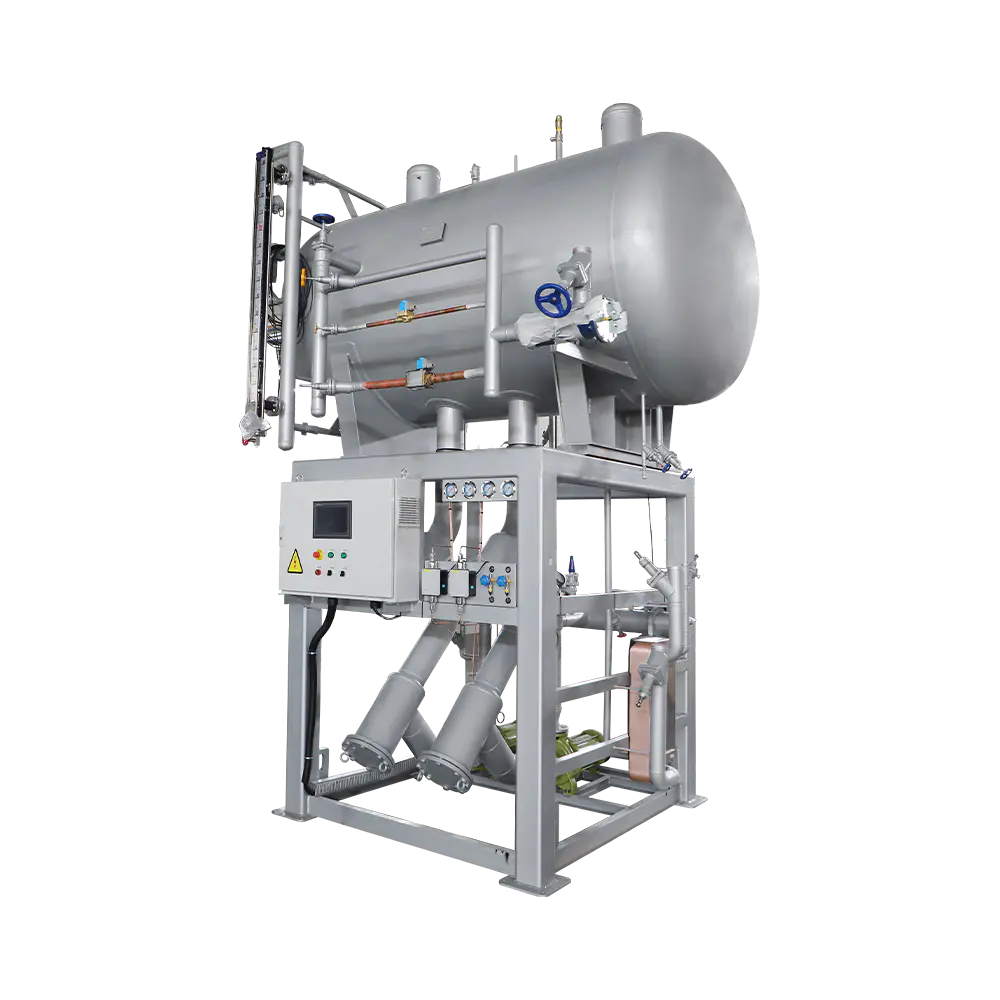
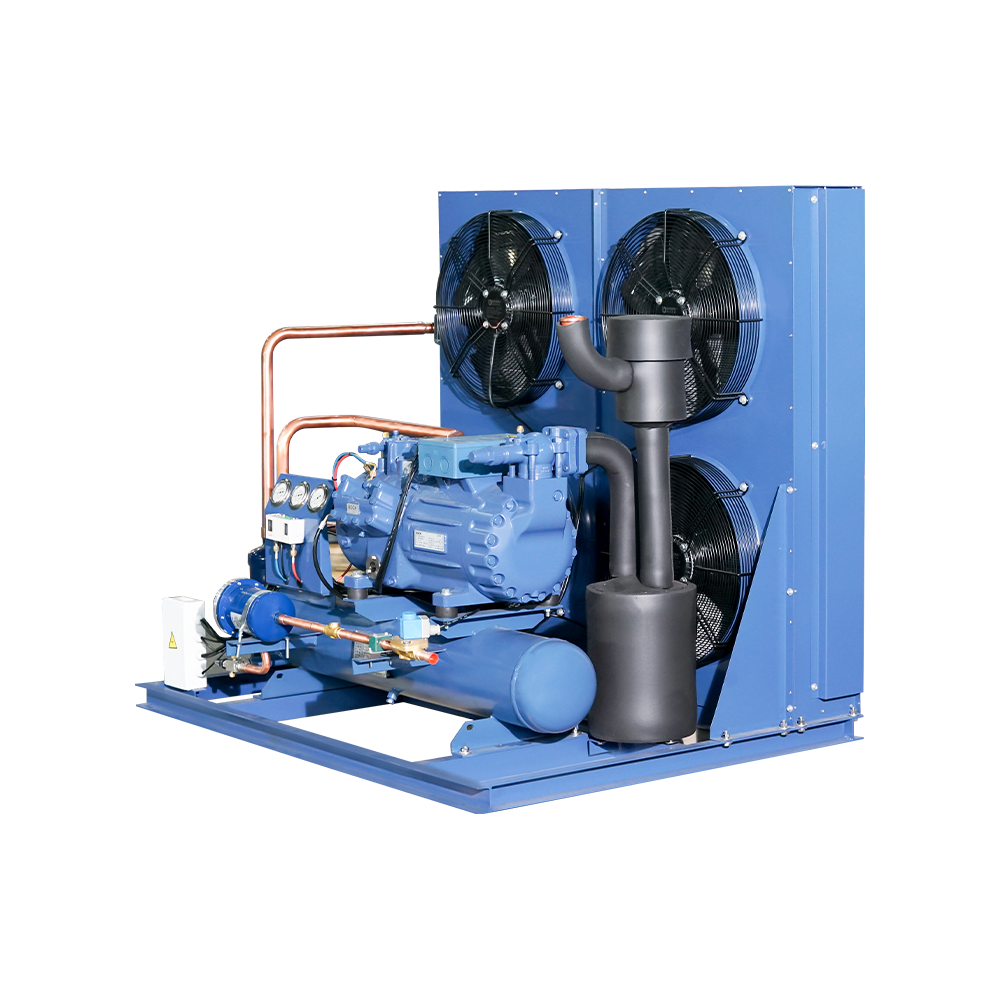
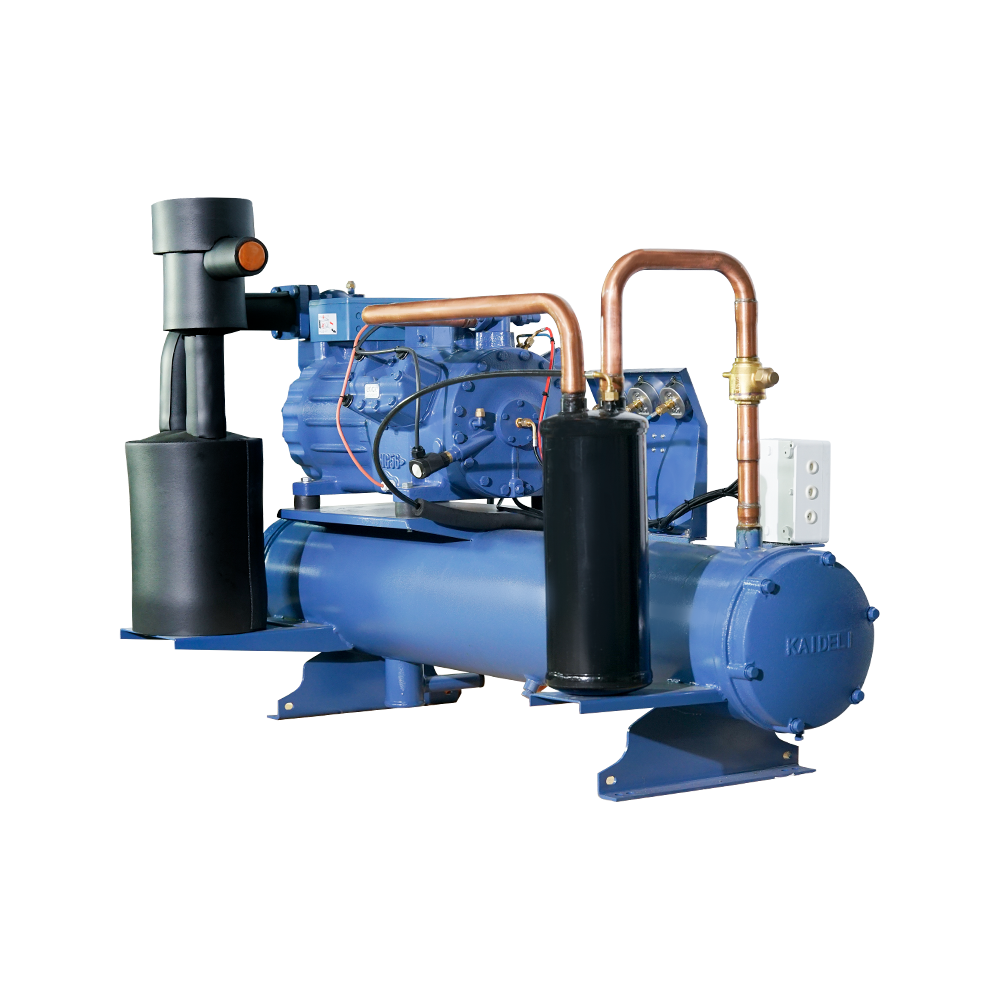
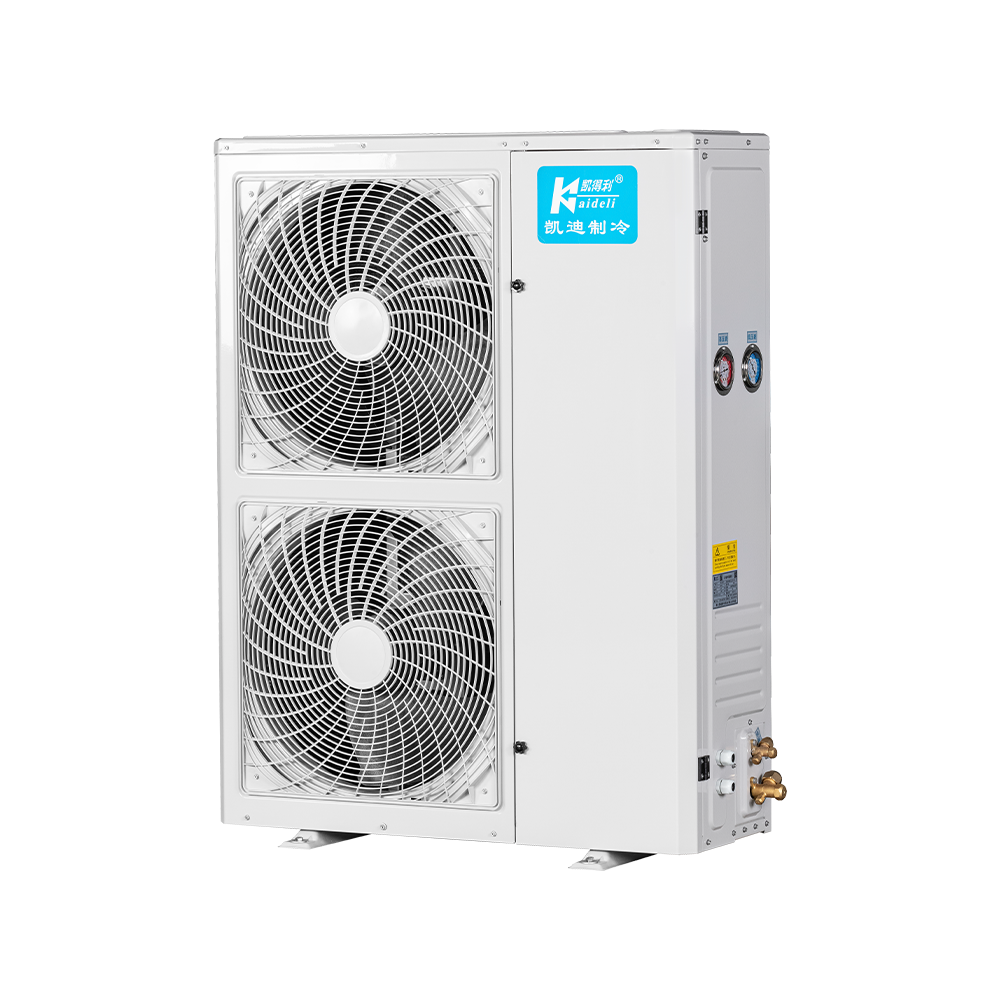
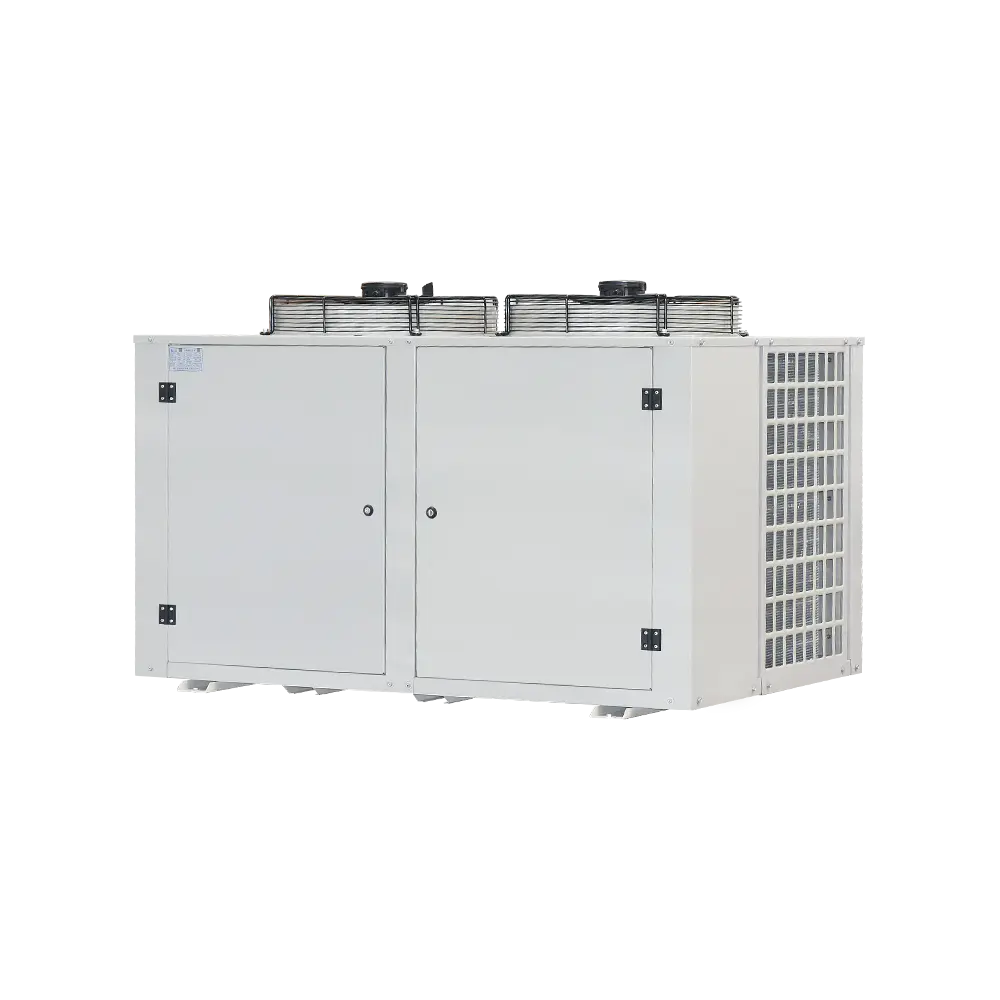
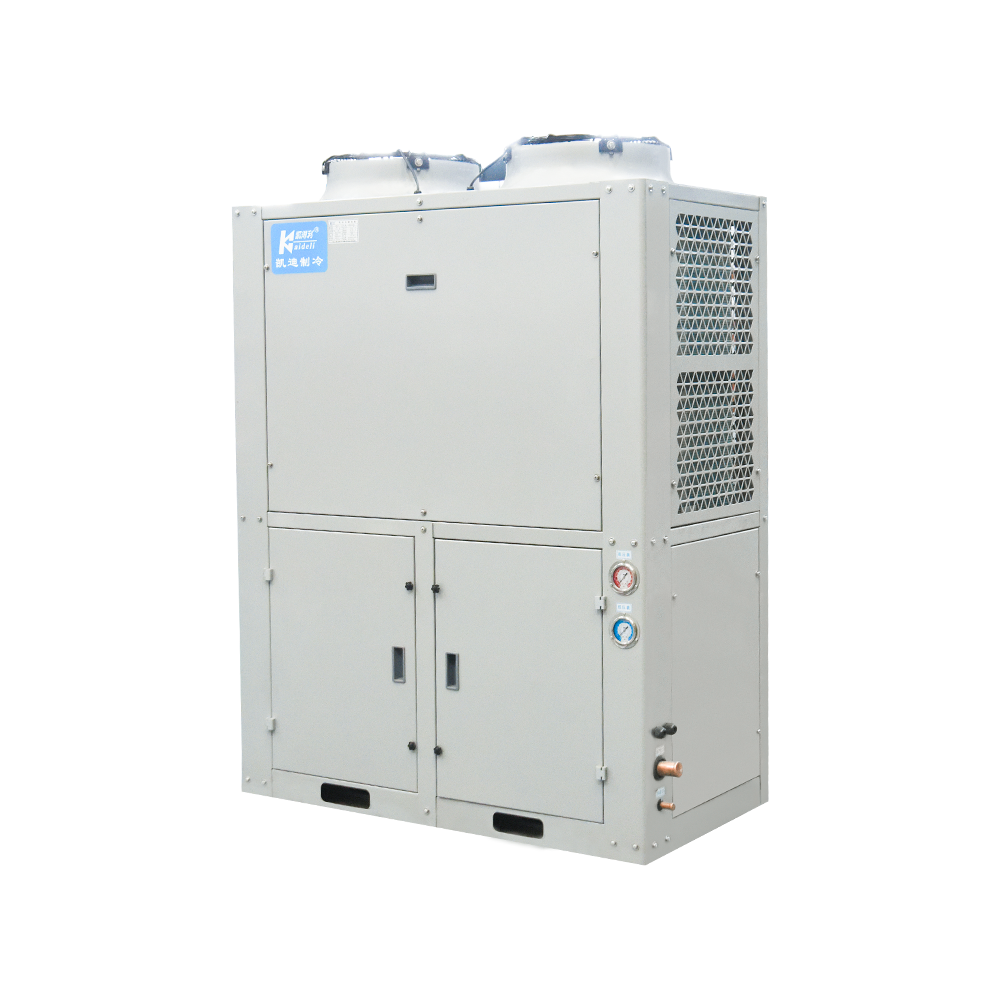
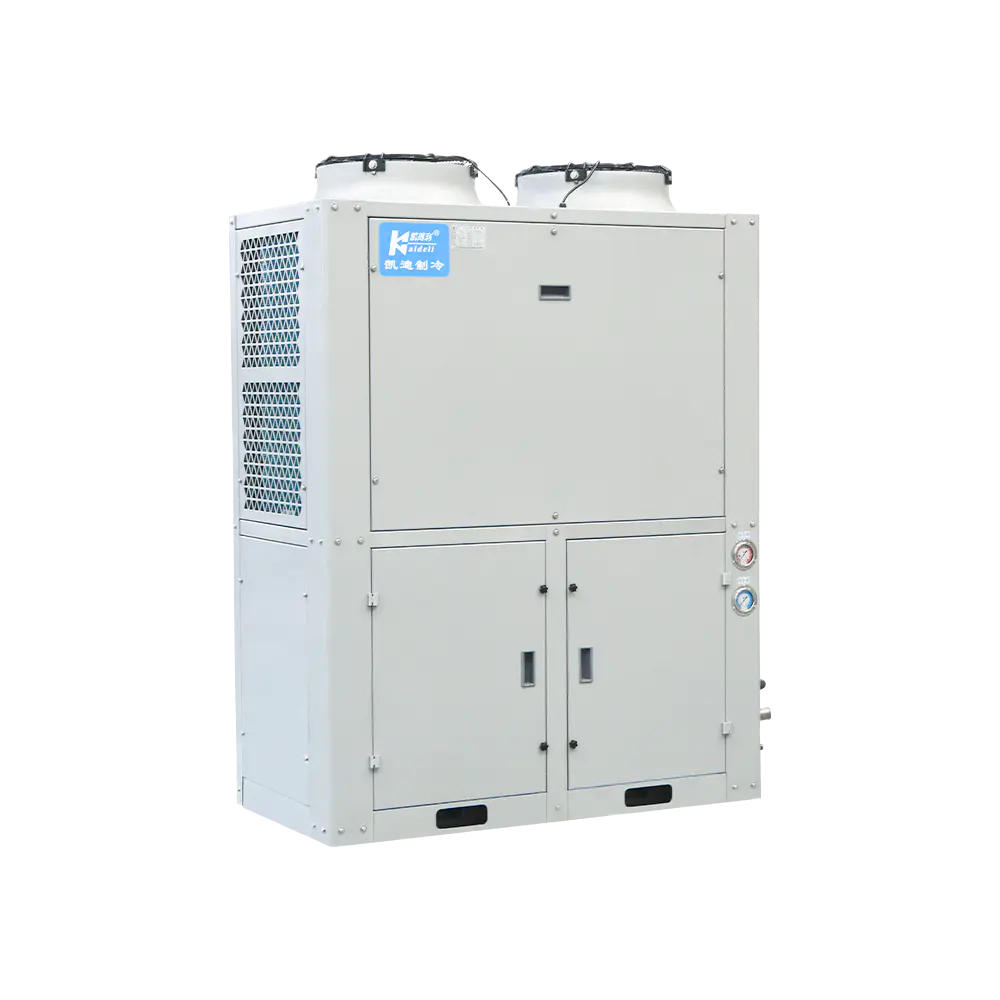
Barrel Pump Condensing Unit is a core industrial refrigeration device integrating liquid supply by pump and condensation functions. It drives refrigerant circulation via a mechanical pump and collaborates with a gas-liquid separation and condensation system to provide a stable cold source for large and medium-sized refrigeration scenarios. With nearly 30 years of experience in the refrigeration sector, Zhejiang Kaidi Refrigeration Equipment Co., Ltd (hereinafter referred to as Kaidi) has developed Barrel Pump Condensing Units widely used in cold chain, food processing, pharmaceutical storage and other industries across the globe. Relying on standardized production and customized solution design, Kaidi has become a cooperative partner of well-known enterprises such as GLP, JD Logistics and Shanghai Pharmaceuticals.
1. Core Working Principle
The operation of a Barrel Pump Condensing Unit is based on refrigerant circulation and gas-liquid separation technology, with the core process as follows:
- Throttled low-temperature refrigerant first enters the fluorine barrel for gas-liquid separation and storage.
- The fluorine pump pressurizes and delivers low-temperature liquid, which is several times the evaporation capacity, to the evaporator. After absorbing heat from the cooled medium, part of the liquid vaporizes.
- The gas-liquid mixture returns to the fluorine barrel through the return pipe for separation again, and the gaseous refrigerant is sucked and compressed by the compressor.
- High-pressure gaseous refrigerant enters the condenser to dissipate heat and condense into liquid state, re-participating in the circulation.
In the design of core components of the equipment, Kaidi integrates independently developed intelligent pressure control technology and high-efficiency gas-liquid separation structure, combined with fluorine pumps and compressors processed by advanced CNC machining, ensuring the system operates stably under the working condition of -50℃~20℃.
2. Core Performance and Product Highlights
2.1 Key Performance Parameters
| Performance Indicator |
Industry Standard Value |
Kaidi Product Value |
Advantage Description |
| Heat Exchange Efficiency Improvement |
10% higher than traditional systems |
25%-30% higher than traditional systems |
Optimized evaporator wetting design reduces the impact of oil film adhesion |
| Liquid Supply Distance |
≤ 50 meters |
≤ 100 meters |
Enhanced pump power design reduces pipeline resistance loss |
| Operating Energy Consumption |
100% reference value |
60%-80% reference value |
Combined with waste heat recovery technology to reduce external energy demand |
| Automatic Response Speed |
≥ 3 seconds |
≤ 1 second |
Equipped with independently developed intelligent control system for real-time adjustment of operating parameters |
2.2 Core Product Highlights
- Long-distance liquid supply capacity: Relying on the mechanical force of the pump, it overcomes pipeline hydraulic pressure and resistance loss, suitable for long-distance liquid supply needs of multi-storey or large-scale factory buildings.
- Integrated hot gas defrosting: Utilizes compressor exhaust waste heat for defrosting, avoiding energy consumption of electric defrosting and icing problems of water flushing defrosting, with defrosting temperature stably controlled at around 10℃.
- Full working condition adaptability: Compatible with various refrigerants such as R22 and CO2, with a pressure-bearing grade of 3.0MPa, meeting the temperature and pressure requirements of different scenarios such as cold chain logistics and pharmaceutical cold storage.
- Intelligent monitoring system: Integrates temperature and pressure sensors and remote transmission modules, supporting real-time monitoring of equipment operating status and fault early warning, with data synchronized to Kaidi's national service platform.
3. Application Scenarios and Practical Cases
3.1 Main Application Fields
Barrel Pump Condensing Units are suitable for large and medium-sized refrigeration systems, with core application scenarios including:
- Cold chain logistics: Fresh-keeping storage of goods in large cold storages and refrigerated transportation hubs.
- Food processing: Temperature reduction in production lines of meat slaughtering, baked goods and quick-frozen foods.
- Pharmaceutical and chemical industry: Cool storage of drugs, vaccine storage and low-temperature treatment of chemical raw materials.
- Edible fungus cultivation: Constant temperature and humidity control in strain cultivation rooms.
3.2 Typical Application Cases
- JD Logistics East China Regional Cold Chain Center: 20 sets of Kaidi Barrel Pump Condensing Units are adopted to provide -25℃ frozen storage solutions for a 100,000-square-meter cold storage. The system has a failure rate of less than 0.5% during 3 consecutive years of operation, saving 800 tons of standard coal annually.
- Shanghai Pharmaceuticals Vaccine Storage Warehouse: Customized Barrel Pump Condensing Units combined with multi-temperature zone control technology achieve precise temperature control of 2℃~8℃, meeting the strict temperature control requirements for vaccine storage and passing the national medical cold chain equipment certification.
- Xiangru Biological Edible Fungus Base: Taking advantage of the equipment's long-distance liquid supply capacity, it provides a constant temperature environment of 15℃~20℃ for 50 standardized cultivation sheds, increasing edible fungus output by 12% and reducing energy consumption by 22% compared with traditional systems.
4. Product Type Comparison
| Liquid Supply Method |
Applicable Scenarios |
Heat Exchange Efficiency |
Operation Difficulty |
Kaidi Recommendation Index |
| Barrel Pump Condensing Unit (pump liquid supply) |
Large and medium-sized cold storages, long-distance liquid supply scenarios |
High (25%-30% higher than direct expansion liquid supply) |
Low (centralized control + automation) |
★★★★★ |
| Direct expansion liquid supply |
Small refrigeration equipment, short-distance liquid supply |
Medium (low utilization rate of evaporation area) |
High (frequent adjustment of expansion valve required) |
★★★☆☆ |
| Gravity liquid supply |
Small and medium-sized cold storages, single-storey buildings |
Medium (10% lower than pump liquid supply) |
Medium (limited by installation height) |
★★★☆☆ |
Kaidi can provide selection design and system integration solutions for Barrel Pump Condensing Units according to users' site scale, liquid supply distance, temperature control accuracy and other needs, with full follow-up from preliminary on-site survey to later commissioning and delivery.
5. Maintenance and Servicing Guidelines
5.1 Daily Maintenance Specifications
- Daily: Clean dust on condenser fins, check fluorine barrel liquid level (not exceeding 70%), record inlet and outlet temperature and pressure data.
- Weekly: Check tightness of pipeline connection parts, ensure flexibility of movable valves, clean impurities in filters.
- Monthly: Detect oil separation efficiency of oil separators, supplement or replace refrigeration oil, calibrate temperature and pressure sensors.
- Annual: Conduct chemical cleaning of condensers (when scaling exceeds 3mm), calibrate safety valves and high-low pressure controllers, carry out comprehensive rust removal and anti-corrosion treatment.
5.2 Professional Maintenance Points
- Cleaning requirements: Physical cleaning adopts high-pressure water or tube cleaners; chemical cleaning needs to control the ratio of descaling agent (1:10~1:20) to avoid corrosion of copper tubes.
- Shutdown protection: When shutting down for a long time, pump refrigerant into the liquid receiver, close inlet and outlet valves, and preheat the crankcase heater 8-12 hours in advance.
- Fault handling: Liquid hammer is mostly caused by excessive refrigerant flow rate during defrosting. Kaidi's equipment is pre-installed with two-step opening solenoid valves to prevent this problem; if it occurs, shut down the machine immediately to relieve pressure, check fluorine barrel liquid level and defrost system pressure, and contact Kaidi's technical personnel for on-site debugging if necessary.
- Service support: Kaidi has branches in Beijing, Guangzhou and other places nationwide, providing on-site maintenance services within 48 hours, and establishing full-life-cycle maintenance files for equipment.
6. Frequently Asked Questions (FAQ)
-
What scale of cold storage is suitable for a Barrel Pump Condensing Unit?
Answer: It is suitable for large and medium-sized cold storages with an area of over 500 square meters, or scenarios where the liquid supply distance exceeds 50 meters. Zhejiang Kaidi Refrigeration Equipment Co., Ltd offers corresponding models for cold storages ranging from 1,000 to 100,000 square meters, and has provided customized equipment for multiple large-scale cold chain centers.
-
How to handle liquid hammer during equipment operation?
Answer: Liquid hammer is mostly caused by excessive refrigerant flow rate during defrosting. Kaidi's equipment is pre-installed with two-step opening solenoid valves to prevent this problem. If it occurs, shut down the machine immediately to relieve pressure, check the liquid level of the fluorine barrel and the pressure of the defrosting system, and contact Kaidi's technical personnel for on-site debugging if necessary.
-
Compared with ordinary condensing units, where does the energy-saving advantage of Barrel Pump Condensing Unit lie?
Answer: The core energy-saving points include three aspects: first, the heat exchange efficiency of the flooded evaporator is improved, reducing energy loss; second, the condensing temperature and evaporation pressure loss are reduced, and the system energy consumption is only 60%-80% of that of traditional processes; third, hot gas defrosting replaces electric defrosting, avoiding additional energy consumption. Through optimized flow channel design, Kaidi's equipment saves an additional 10%-15% energy compared with ordinary units.



 02 Nov,2026